
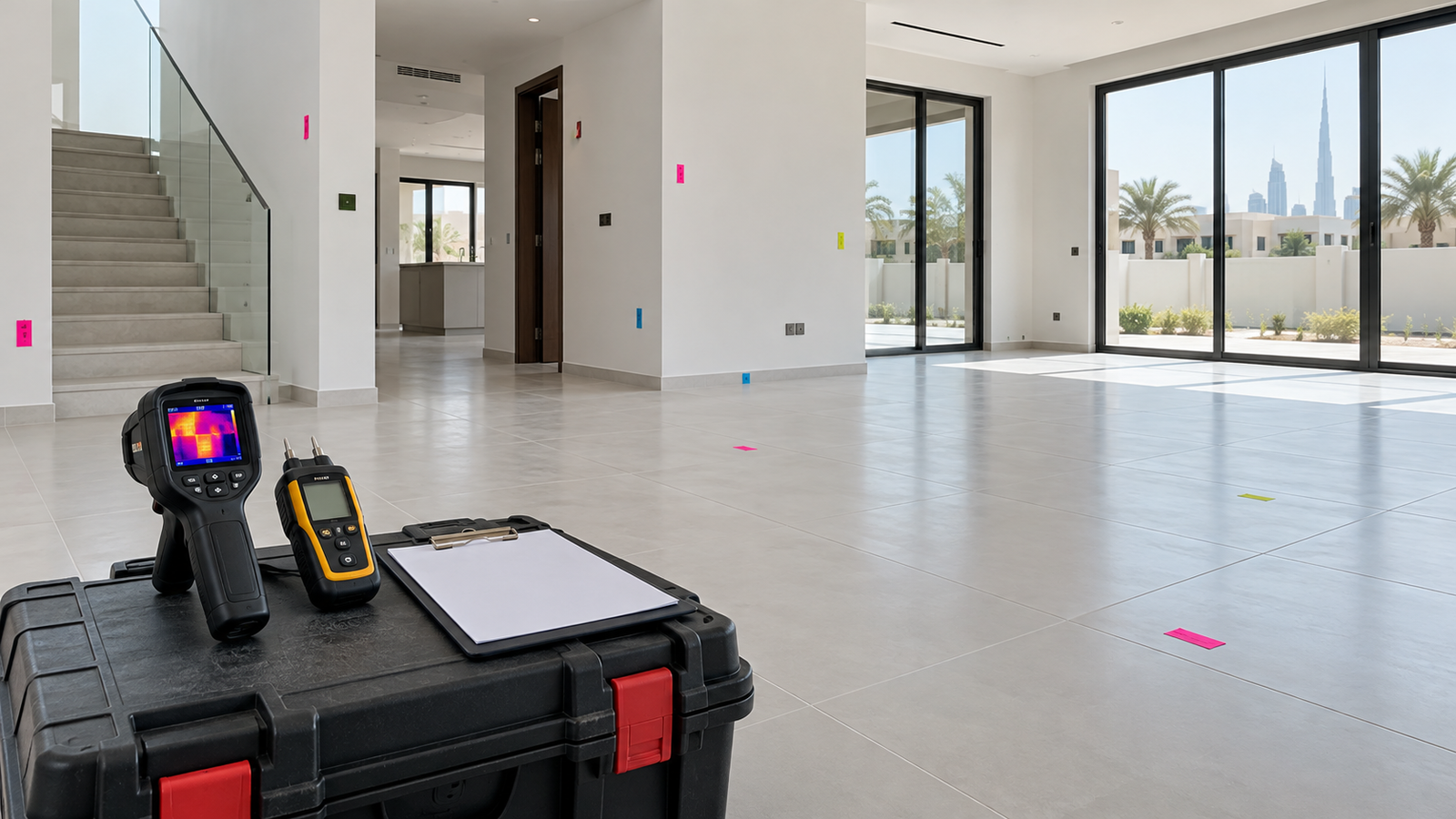
Collecting the keys to a new villa is exciting, but it is also the moment when you have the most leverage to get defects fixed. A snagging inspection in Dubai is a detailed check of a newly built property before or at handover, to identify defects such as cracked tiles, leaking pipes, faulty electrics, poor waterproofing or AC problems, so the developer repairs them before you move in.
Villas have far more to inspect than apartments: roofs and terraces, external walls, gardens, boundary walls, parking, drainage and sometimes pools. This guide explains when and how to snag a villa, what a professional inspection costs, a complete villa snagging checklist, the most common defects, how to deal with the developer and what protections the law provides.
Key takeaways
- Snag your villa before you accept handover, ideally during the developer’s pre-handover inspection while the villa is still empty.
- A professional snagging inspection costs about AED 2,500–4,000 for a 3–4 bedroom townhouse and AED 3,000–6,000+ for a large villa, plus VAT; reports usually arrive within 6–48 hours.
- Good inspectors use thermal imaging and moisture meters to find hidden leaks, insulation gaps and electrical hot spots.
- Villas need checks beyond the interior, including the roof, waterproofing, external walls, drainage falls, boundary walls, irrigation and pool plant rooms.
- For jointly owned property in Dubai, the law provides 10 years of developer liability for structural defects and one year from handover for defective installations such as mechanical, electrical and plumbing works. Check your SPA for the exact terms.
What is snagging?
A “snag” is any defect, incomplete work or item that does not meet the agreed specification. Snagging is the process of finding and listing these issues and having the developer fix them. Snags range from cosmetic issues, such as paint marks or scratched glass, to serious problems, such as water leaks, poor drainage, unsafe electrics or cracks.
When should you snag a villa?
- Pre-handover inspection: many developers invite buyers to inspect the villa before key collection. This is the best time, as the villa is empty and the developer’s team is still on site.
- Before signing the handover form: do not sign a document confirming that the villa is in perfect condition if you have not inspected it.
- Re-inspection: after the developer says repairs are complete, check every item again. A second visit is often as important as the first.
- Before the defects liability period ends: check the villa again near the end of the first year, when issues such as leaks, AC faults and cracks often appear.
DIY or professional snagging?
You can snag a villa yourself using a checklist, but a professional inspection is usually worth the cost for a villa. Professional inspectors bring:
- Thermal imaging cameras to detect moisture, insulation gaps and electrical hot spots
- Moisture meters for walls, ceilings and wet areas
- Electrical testers for sockets, earthing and circuits
- Levels and gauges to check tiling, alignment and drainage falls
- Experience of common defects in Dubai’s climate and of what developers typically accept
- A detailed report with photos and locations, which developers take more seriously
| Property | Typical snagging cost (AED) |
|---|---|
| 3–4 bedroom townhouse | ~2,500–4,000 + VAT |
| Large villa (5+ bedrooms) | ~3,000–6,000+ + VAT; very large plots often quoted per sq ft |
| Thermal imaging and moisture add-on (if not included) | ~500–1,500 |
| Re-inspection after repairs | Varies; ask whether a second visit is included |
Indicative 2026 prices from Dubai snagging and inspection guides. Pool plant rooms and large external areas can add to the scope.
Villa snagging checklist
1. External walls and façade
- Cracks in render, paint or cladding
- Uneven paint, stains and missing sealant around windows and doors
- Damaged or loose cladding, stone or decorative features
- External lights, sockets and fixtures fitted and working
2. Roof and terraces
- Waterproofing membrane intact, with no visible damage
- Drainage falls towards outlets, with no ponding water
- Roof drains clear and connected
- Parapets, railings and roof access secure
- AC condensers on the roof installed securely and neatly
3. Doors and windows
- Doors open, close and lock smoothly, with even gaps
- Windows and sliding doors run smoothly and seal properly
- No scratches or cracks in glass and frames
- Seals intact to keep out sand, dust and water
- Handles, locks and stoppers fitted
4. Walls, ceilings and paint
- No cracks, bulges or uneven surfaces
- Even paint finish, with no patches, drips or marks
- No signs of damp or water stains, especially below bathrooms and terraces
- Access panels and ceiling hatches fitted and neat
5. Floors and tiling
- Tiles level and evenly spaced, with no cracks, chips or lippage
- No hollow-sounding tiles, which can indicate poor adhesion
- Grout complete and consistent
- Skirting boards fitted and sealed
- Stairs: treads level, nosings secure, handrails firm
6. Kitchen
- Cabinets level, doors aligned, hinges and drawers working
- Worktops undamaged and properly sealed
- Appliances installed and working, if included
- Sink, taps and drainage working without leaks
- Extractor hood working and vented
7. Bathrooms
- Water pressure and hot water at every tap and shower
- No leaks under basins, around toilets or behind showers
- Showers and floors drain towards the drain, with no standing water
- Silicone seals complete around baths, basins and shower trays
- Extractor fans working
- Glass screens, mirrors and accessories fitted securely
8. Electrical
- All sockets, switches and lights working
- Distribution board labelled, with breakers and earthing in place
- No exposed wiring, loose fittings or scorch marks
- Doorbell, intercom, data and TV points working
- Smart-home systems, if included, set up and working
9. Air conditioning
- Every unit cools effectively and evenly
- Thermostats working in each zone
- No noise, vibration or leaks
- Condensate drains connected and flowing
- Grilles and ducts clean, with no construction dust
10. Plumbing and water
- Water heaters installed and working
- Water tank and pumps installed and clean
- Drainage from all fixtures flows freely
- No signs of leaks in ceilings, walls or the garden
11. Garden and external works
- Ground levels slope away from the villa
- Paving level, with no cracks or loose stones
- Boundary walls, gates and fences complete and secure
- Irrigation points and taps working, if provided
- Landscaping complete as per the specification
- Parking area, canopy and driveway finished
12. Pool (if included)
- Tiles and coping undamaged
- No leaks or cracks
- Pump, filter and plant room working and ventilated
- Pool lighting and safety features working
13. Documents and handover items
- Keys, access cards, remotes and parking passes
- Warranties and manuals for AC, appliances, water heaters and pool equipment
- As-built drawings, where available
- DEWA connection and meter readings
- Service charge details and community rules
Common defects found in new Dubai villas
- Waterproofing failures in bathrooms, roofs and terraces
- Poor drainage falls on roofs, terraces and showers
- AC issues: poor cooling, unbalanced zones, leaks and noisy units
- Hollow or cracked tiles and inconsistent grout
- Paint defects and hairline cracks in walls and ceilings
- Misaligned doors and windows, with poor seals letting in dust
- Electrical faults: dead sockets, unlabelled boards or missing earthing
- Plumbing leaks under sinks and behind toilets
- Incomplete external works, such as unfinished paving, landscaping or boundary walls
- Construction debris in drains, ducts and the roof
How to record and submit snags
- Number every item: one defect per line, with the room and exact location.
- Take clear photos of each defect, ideally with a reference point.
- Describe the problem simply and objectively.
- Submit in writing through the developer’s official channel and keep proof of the submission date.
- Keep every version of the snag list returned by the developer.
- Track repairs: note who attended, when and what was done.
- Re-inspect each item yourself before marking it as closed.
Should you refuse handover?
Not every snag justifies refusing handover, and refusing without good reason can cause disputes or delays under your sale and purchase agreement (SPA). Read your SPA and the handover notice carefully. In most cases, buyers accept handover and submit a snag list for the developer to fix. Do not sign any statement you do not understand, such as one confirming that the villa has no defects. If there is a serious defect, such as a major leak, safety issue or significant structural concern, seek specialist advice before accepting the keys.
Your legal protections
For jointly owned property in Dubai, which includes many villas in master communities, the law provides that developers are responsible for:
- Structural defects: for 10 years from the date of the project’s completion certificate
- Defective installations, such as mechanical, electrical and sanitary works: for one year from handover
In addition, 5% of the project’s escrow funds is retained for one year after completion as a safeguard. Your SPA may set out additional warranties, and manufacturers’ warranties may cover appliances and equipment. Keep all records, and report defects in writing within the relevant periods.
Snagging if you buy an off-plan resale
If you buy an off-plan villa on resale before handover, the snagging rights usually pass to you as the new owner at handover. Check the assignment agreement and make sure the developer has your details for the handover inspection. If you buy a villa shortly after handover, ask the seller for the original snag list and repair records, and check how much of the one-year period remains.
Tips for a smooth handover
- Book a snagging company as soon as you receive the handover notice
- Inspect in daylight, with water and electricity connected
- Run all taps, showers and AC units during the inspection
- Test drainage by running water on terraces and in showers, where possible
- Do not move furniture in until major snags are fixed
- Book a deep clean and AC duct cleaning after repairs to remove construction dust
- Keep a diary of any issues that appear during the first year
Frequently asked questions
What is a snagging inspection in Dubai?
A snagging inspection is a detailed check of a newly built property before or at handover to identify defects, incomplete work and items that do not meet the specification, so the developer can fix them before you move in.
How much does villa snagging cost in Dubai?
A professional snagging inspection typically costs about AED 2,500–4,000 for a 3–4 bedroom townhouse and AED 3,000–6,000 or more for a large villa, plus VAT. Thermal imaging and moisture testing may cost an extra AED 500–1,500 if not included.
When should I do a snagging inspection?
The best time is during the developer’s pre-handover inspection, before you collect the keys and sign the handover form, while the villa is empty. Re-inspect after repairs and again near the end of the first year.
Is snagging worth it for a new villa?
Usually, yes. Villas have many more areas to check than apartments, including roofs, terraces, external walls, drainage and gardens. A professional report with photos and thermal imaging can identify defects that are hard to spot and makes it easier to get them fixed by the developer.
How long is the developer responsible for defects in Dubai?
For jointly owned property in Dubai, developers are responsible for structural defects for 10 years from the project’s completion certificate and for defective installations, such as mechanical, electrical and plumbing works, for one year from handover. Check your SPA for any additional warranties.
Can I refuse to take handover of my villa because of snags?
Minor snags usually do not justify refusing handover; they are normally fixed after handover through the snag list process. If there is a serious defect, read your SPA and seek specialist advice before deciding whether to accept the keys.
How long does a snagging report take?
Most snagging companies deliver their report within about 6 to 48 hours of the inspection, depending on the property size.
Data sources: Real Estate Club Dubai guide to snagging and property inspection companies (July 2026); haus & haus guide to property snagging in Dubai (2026); Dubai legislation on jointly owned property and developer obligations as summarised in legal commentary. Costs are indicative market ranges and may differ from actual quotes.
Disclaimer: This article is for general information only and does not constitute legal, engineering, surveying or real estate advice, and nothing in it is a recommendation or endorsement of any specific company or service. A checklist is not a substitute for a professional inspection. Developer obligations, warranty periods and handover procedures depend on the applicable laws, your sale and purchase agreement and the specific project, and may change. Costs above are indicative estimates compiled from third-party sources that we do not control or guarantee. This article is not affiliated with or endorsed by any developer, inspector or authority mentioned. Always read your SPA and handover documents carefully, commission a qualified inspector, and seek advice from a lawyer or the Dubai Land Department (DLD) and RERA on your rights before signing any handover documents. While we aim to keep this information accurate and up to date, it may contain errors or omissions. We accept no liability for any loss arising from reliance on this content.