
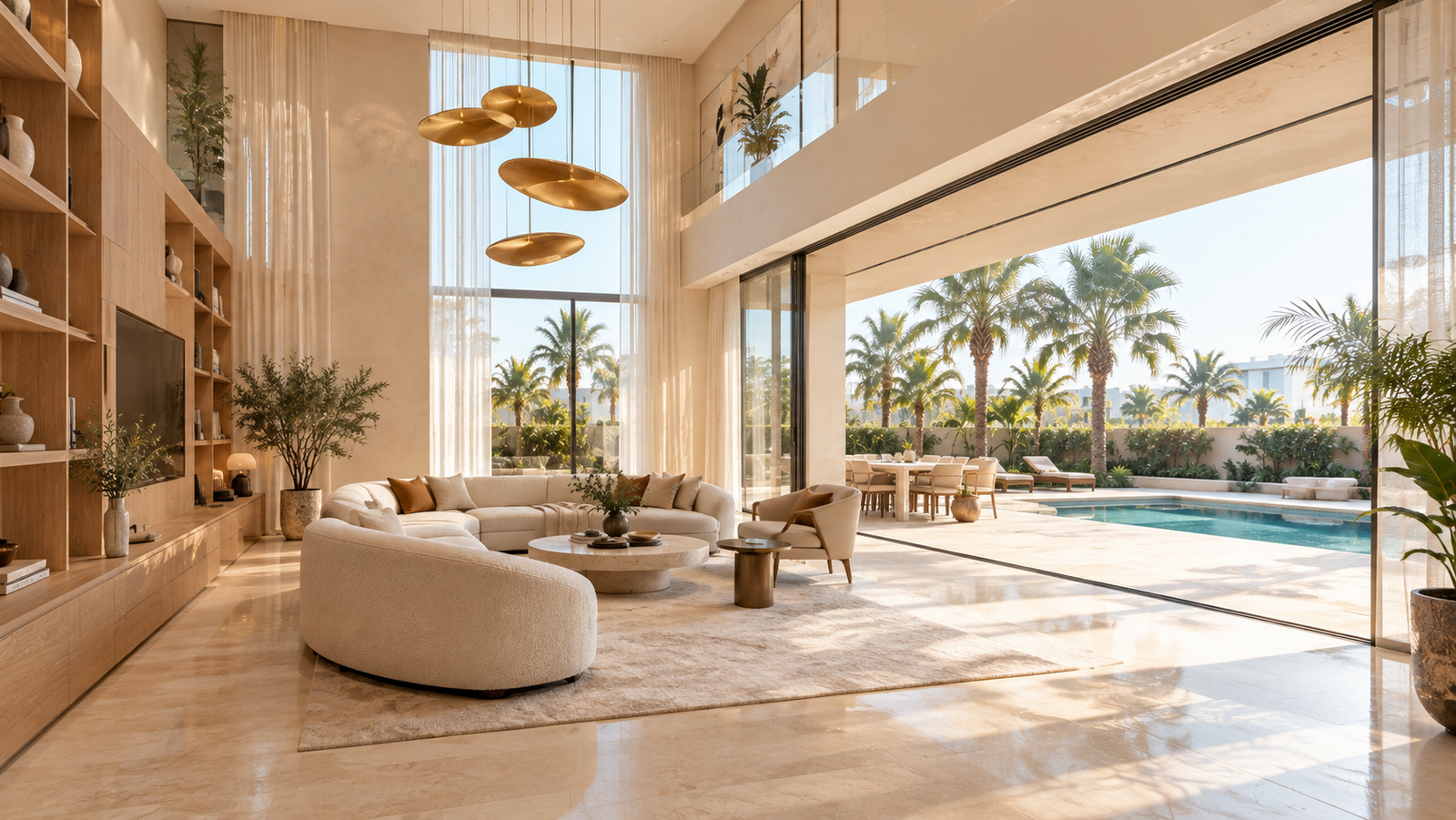
A well-designed interior can make a Dubai villa feel cooler, calmer and far more personal, and it can add significant value when you sell or rent. But villa interior design in Dubai comes with its own challenges: intense sunlight, sand and dust, high humidity in summer, large open spaces to fill, and the need to balance family living, entertaining and often a separate majlis for guests.
This guide covers the most popular interior styles for Dubai villas, design trends for 2026, ideas room by room, materials that suit the climate, typical 2026 costs per square foot, designer fees, timelines, approvals and how to choose a designer.
Key takeaways
- Popular Dubai villa interior design styles include warm contemporary (“quiet luxury”), modern Arabic, Mediterranean, minimalist Japandi-style and modern classic.
- Full design-and-fit-out typically costs about AED 450–900 per sq ft for mid-market homes, AED 900–1,400 for premium villas and AED 1,400–2,000+ for luxury villas.
- Designer fees are usually 10–20% of the project budget or about AED 175–550 per sq ft, depending on scope and studio.
- Renovating a 3–5 bedroom villa typically costs about AED 80,000–250,000 for a refresh and AED 600,000–2 million+ for a luxury fit-out.
- Allow around 15% contingency, plus permits for wall, MEP and wet-area changes; villa projects often take 5–8 months from design to completion.
Popular villa interior design styles in Dubai
Warm contemporary (“quiet luxury”)
The leading style in Dubai villas today combines clean lines with warm, natural materials: travertine and honed stone, oak and walnut, matte plaster and microcement walls, linen and bouclé fabrics, and subtle brass or bronze details. Colours are soft neutrals, sand, taupe and warm white. It feels calm and timeless and suits both new and renovated villas.
Modern Arabic
Modern Arabic interiors reinterpret traditional elements such as arches, geometric patterns, mashrabiya screens, carved wood and brass lanterns in a cleaner, contemporary way. It works especially well in majlis rooms, entrances and dining areas, and connects the home to its regional setting.
Mediterranean
Mediterranean interiors use white or warm limewashed walls, terracotta or stone floors, arches, wooden beams, natural textiles and lots of greenery. This style suits the many Spanish- and Mediterranean-inspired villas in communities such as Arabian Ranches, The Lakes, Villanova and The Villa.
Minimalist and Japandi
A blend of Japanese and Scandinavian design, with pared-back furniture, light woods, natural textures, hidden storage and a focus on calm and function. It is popular in modern villas and with families who want low-clutter living.
Modern classic
Elegant mouldings, panelled walls, marble, symmetrical layouts, chandeliers and refined furniture, updated with a lighter palette and contemporary pieces. Modern classic remains popular in larger villas and for formal reception areas.
Coastal and resort style
Light, airy interiors with white and blue tones, natural fibres, rattan, light timber and indoor-outdoor flow, ideal for beachfront and lagoon-side villas on Palm Jumeirah, Dubai Islands or Tilal Al Ghaf.
Interior design trends for Dubai villas in 2026
- Calm, spa-like spaces: soft neutrals, natural materials, layered lighting and wellness-inspired bathrooms
- Curved furniture: rounded sofas, arches and soft edges for a relaxed, sociable feel
- Statement lighting: sculptural pendants and chandeliers in double-height spaces, layered with hidden LED lighting
- Warmer, bolder colour: deep blues, olive and eucalyptus greens, terracotta and berry tones, sometimes used across walls and ceilings
- Textile walls: fabric panels, woven textiles and tapestries in place of traditional artwork
- Integrated smart homes: lighting, climate, blinds, audio and security controlled from one system, built in rather than visible
- Wellness rooms: home gyms, saunas, yoga rooms and quiet zones
- Local identity: desert-inspired palettes, geometric patterns and modern mashrabiya details
Room-by-room ideas
Entrance and majlis
The entrance sets the tone of the villa. Use durable stone flooring, statement lighting and built-in storage for shoes and bags to keep sand out of living areas. A majlis, a separate formal reception room, is important for many families in Dubai: consider comfortable low seating, rich textiles, soft lighting and a separate guest washroom.
Living and dining
Open-plan living and dining areas work best when divided into zones with rugs, lighting and furniture layout. Large sliding doors to the garden or pool make the space feel bigger. Choose performance fabrics that resist stains and fading from strong sunlight.
Kitchen
Many Dubai villas have a “show kitchen” in the open-plan area and a separate closed kitchen for heavy cooking. Use quartz or porcelain worktops, which resist heat and staining, plenty of tall storage, and a powerful extractor. Kitchen islands with seating are popular in family villas.
Master suite
A hotel-style master suite with a walk-in wardrobe, dressing area and spa bathroom is one of the most valued features in a villa. Use blackout blinds for the intense morning sun, soft textured fabrics and warm lighting.
Children’s rooms
Design rooms that can grow with your children, with flexible furniture, plenty of storage, durable washable finishes and study areas. Avoid heavy, permanent themes.
Bathrooms
Walk-in showers, freestanding baths, large-format porcelain or stone, wall-hung vanities and good ventilation are popular. Choose finishes that resist limescale, as Dubai water can leave marks on glass and fittings.
Home office and family spaces
A dedicated study, a family TV room or a flexible guest room adds value. Use acoustic panels and good task lighting for home offices.
Maid’s room and service areas
Do not overlook service spaces: a well-designed laundry, storage and a comfortable, ventilated maid’s room improve how the whole home runs.
Choosing materials for Dubai’s climate
- Flooring: porcelain, natural stone and engineered wood suited to air-conditioned interiors; avoid solid wood that may move in humidity
- Fabrics: UV-resistant and performance fabrics for sunny rooms; washable covers for family areas
- Walls: washable, mould-resistant paints, especially in bathrooms and maid’s rooms
- Window treatments: blackout and solar blinds or sheer curtains to control heat and glare
- Outdoor furniture: powder-coated aluminium, teak and outdoor-grade fabrics
- Colours: lighter tones reflect heat and make rooms feel cooler
How much does villa interior design cost in Dubai?
| Level | Full design and fit-out (AED per sq ft) | Design only (AED per sq ft) |
|---|---|---|
| Basic refresh / rental upgrade | ~250–450 | ~175–220 |
| Mid-market townhouse or villa | ~450–900 | ~220–380 |
| Premium villa | ~900–1,400 | ~380–500 |
| Luxury villa | ~1,400–2,000+ | ~500–550, or 10–20% of build cost |
Published 2026 ranges from Dubai interior design studios, compiled by Real Estate Club Dubai (May 2026). Actual costs depend on scope, materials, furniture and whether structural or MEP work is involved.
Typical villa budgets
- 3–5 bedroom villa refresh (paint, lighting, furniture and soft furnishings, minor upgrades): about AED 80,000–250,000
- 5,000 sq ft villa full design and fit-out in a premium community: about AED 2.5–6 million
- Luxury fit-out of a 3–5 bedroom villa: about AED 600,000 to over AED 2 million, depending on scope
- Very large villas of 8,000–15,000 sq ft with imported materials and bespoke furniture: AED 7–18 million or more
- Imported furniture and fittings: typically 15–30% more than European list prices once shipping and duties are included
Example: 4-bedroom villa renovation
A published example for a 3,800 sq ft, 4-bedroom villa renovation, including a new kitchen and bathrooms, structural wall removal and new lighting, came to:
- Design fee: about AED 280,000
- Build and fit-out: about AED 3.15 million
- Permits and NOCs: about AED 28,000
That totals about AED 3.46 million, or roughly AED 910 per sq ft, over about 32 weeks. Many projects are much smaller in scope and cost a fraction of this.
Designer fee structures
- Percentage of project budget: commonly 10–20%
- Per square foot: about AED 175–550 for full-service design
- Fixed fee: the most cost certainty for a defined scope
- Cost-plus: 10–20% on materials and execution; transparent but uncapped
- Hourly consultation: about AED 250–900 an hour, depending on seniority, for small projects or advice
Separating the design contract from the build contract lets you tender the construction work to several contractors and compare prices.
Budget breakdown and contingency
Every project is different, but a typical villa budget includes design fees, construction and fit-out, joinery, kitchens and bathrooms, lighting and electrical, flooring, furniture, soft furnishings and accessories, smart-home systems and permits. Set aside:
- About 15% contingency for unexpected costs, and up to 20% for very large projects
- About 3–5% of the fit-out cost for regulatory and compliance costs
- About 8–12% of the furniture budget for accessories, art and décor
Timelines
- Design: about 4–8 weeks for concept, layouts, material selection and drawings
- Approvals: about 2–6 weeks, longer for structural or MEP changes
- Procurement: imported furniture and materials can take 8–16 weeks
- Execution: about 8–20 weeks depending on scope
A full villa renovation often takes around 5–8 months from the first design meeting to handover. A furnishing-only project can be completed much faster.
Approvals for villa interior work
- No approval usually needed: painting, furniture, soft furnishings and like-for-like fixture replacements
- Fit-out permit from Dubai Municipality or the relevant authority: wall changes, moving wet areas, MEP work, kitchen and ceiling rebuilds
- Master developer or community NOC: for most renovation work, working hours and debris removal
- DEWA NOC: for changes to electrical load or AC systems
- Civil Defence approval: for changes to fire safety systems
Unapproved work can lead to fines, stop-work orders and problems when you sell. Tenants need the landlord’s written consent before making any changes.
How to choose an interior designer in Dubai
- Check the licence: make sure the company holds a valid trade licence for interior design and, if building, for fit-out contracting.
- Review real projects: look for completed villas in Dubai, ideally ones you can visit or verify.
- Ask for references from recent and older clients.
- Check insurance: professional indemnity for designers and contractors’ all-risk insurance for builders.
- Get a detailed, itemised quote with VAT shown separately.
- Agree on milestones: link payments to deliverables and hold back part of the final payment until snagging is complete.
- Put changes in writing: use written variation orders for any changes to scope or cost.
- Make sure the style fits you: choose a designer whose portfolio matches your taste.
Tips to get the most from your budget
- Prioritise the spaces you use most: kitchen, living area and master suite
- Invest in lighting; it transforms a villa more than almost anything else
- Mix bespoke joinery with high-quality off-the-shelf furniture
- Choose timeless base finishes and add personality with fabrics, art and accessories
- Plan storage early to keep a minimalist look practical
- Order long-lead items early to avoid delays
- For rental villas, choose durable, neutral finishes that appeal to a wide range of tenants
Frequently asked questions
How much does villa interior design cost in Dubai?
Full design and fit-out typically costs about AED 450–900 per sq ft for mid-market villas, AED 900–1,400 per sq ft for premium villas and AED 1,400–2,000 or more for luxury villas. A refresh of a 3–5 bedroom villa can cost about AED 80,000–250,000.
How much do interior designers charge in Dubai?
Interior designers in Dubai usually charge 10–20% of the project budget, about AED 175–550 per sq ft for full-service design, a fixed fee, or about AED 250–900 an hour for consultations.
What is the most popular villa interior style in Dubai?
Warm contemporary design, often called “quiet luxury”, is the most popular style in 2026, combining clean lines with natural stone, warm wood, matte plaster and soft neutral colours. Modern Arabic, Mediterranean, minimalist and modern classic styles are also popular.
How long does a villa interior design project take?
A full villa renovation with design, approvals, procurement and execution typically takes about 5–8 months. Furnishing-only projects can be completed in a few weeks to a few months.
Do I need approval for villa interior work in Dubai?
Painting and furnishing do not usually need approval, but wall changes, moving kitchens or bathrooms, MEP and AC work need a fit-out permit and community NOC, and sometimes DEWA and Civil Defence approvals.
What materials work best in Dubai villas?
Porcelain and natural stone flooring, engineered wood, UV-resistant and performance fabrics, washable mould-resistant paints and good blinds work well in Dubai’s sunny, dusty and sometimes humid climate.
Data sources: Real Estate Club Dubai guide to interior designers, costs and approvals (May 2026); Algedra guide to setting an interior design budget in Dubai (March 2026); Al Huzaifa guide to luxury interior design trends for 2026; Engel & Völkers guide to modern villa designs (March 2026). Costs are published ranges and examples and may differ from actual quotes.
Disclaimer: This article is for general information only and does not constitute professional design, engineering, legal or financial advice, and nothing in it is a recommendation or endorsement of any specific designer, contractor, product or style. Interior design and fit-out costs, fees, timelines and approval requirements in Dubai vary by project, community and authority and may change; the figures above are indicative ranges compiled from third-party sources that we do not control or guarantee. Always obtain itemised written quotes, verify licences and insurance, confirm approvals with your master developer, Dubai Municipality and other relevant authorities, and get your landlord’s consent if you are a tenant before starting any work. While we aim to keep this information accurate and up to date, it may contain errors or omissions. We accept no liability for any loss or damage arising from reliance on this content.