
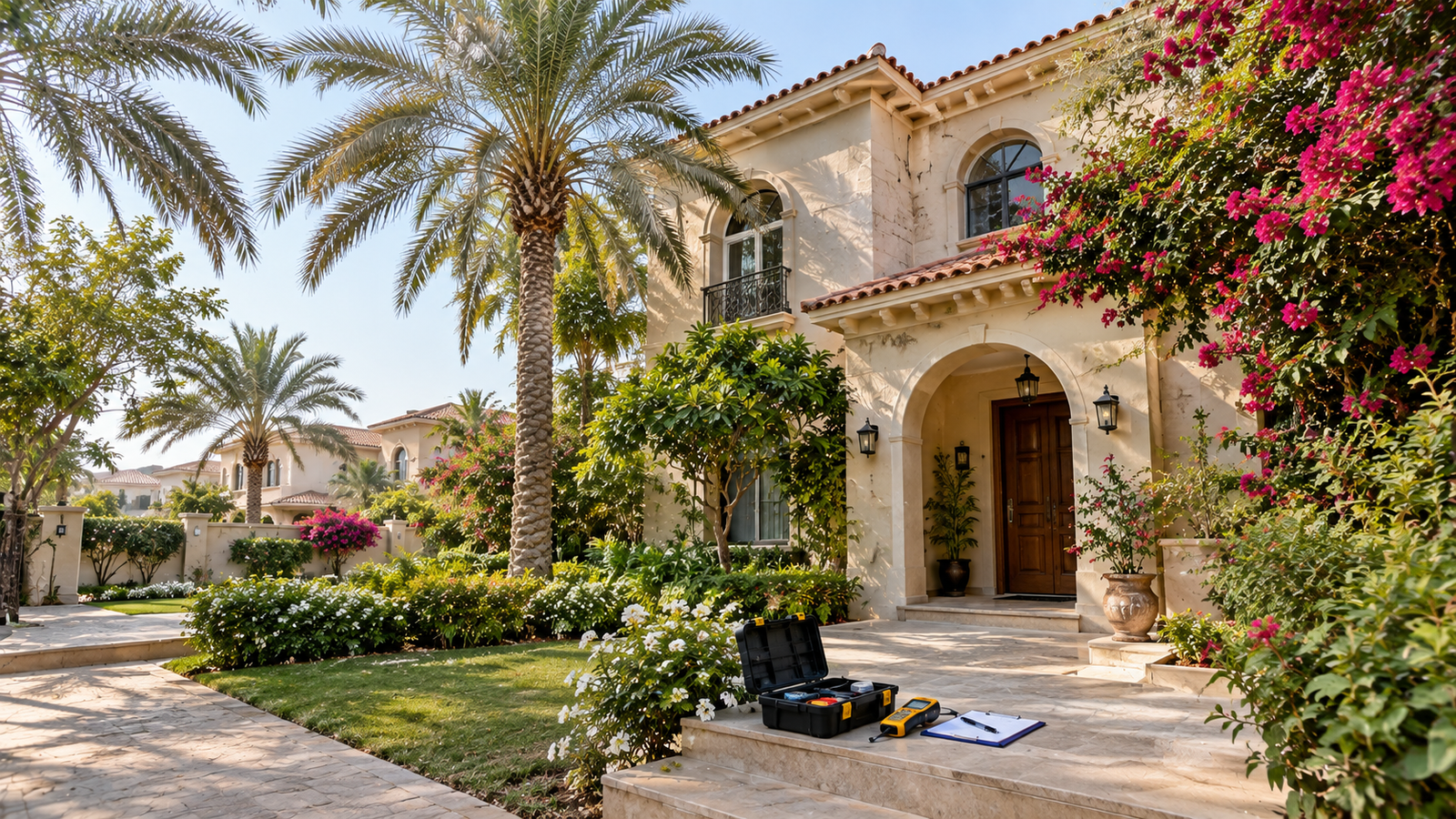
An old villa for sale in Dubai can be one of the best-value purchases in the market. Villas built in the early to mid-2000s in communities such as The Springs, The Meadows, The Lakes, Arabian Ranches, Jumeirah Islands and the first fronds of Palm Jumeirah often sit on larger plots, in mature, green neighbourhoods, at a lower price per square foot than brand-new homes. Many owners buy them precisely because they can renovate to their own taste.
But a 15- or 20-year-old villa in Dubai’s heat and humidity can hide expensive problems: tired AC systems, failing waterproofing, damp, old plumbing and unapproved extensions. This guide explains the pros and cons of buying an older resale villa, gives you a room-by-room inspection checklist, and covers inspection and renovation costs, approvals and how to use defects to negotiate the price.
Key takeaways
- Older villas often offer bigger plots, mature communities and lower prices per sq ft than new villas. For example, Meadows 9 villas sold at about AED 1,590 per sq ft on average, compared with around AED 2,900 for Dubai Hills Estate villas (January–June 2026 transaction data).
- A professional villa inspection in Dubai costs about AED 2,500–4,000 for a 3–4 bedroom townhouse and AED 3,000–6,000+ for a large villa, plus VAT.
- The most common issues are AC systems, roof and wet-area waterproofing, damp and mould, plumbing, electrical capacity, pools and unapproved extensions.
- Renovation typically costs about AED 150–600 per sq ft, with extensive upgrades of AED 500,000–1.2 million or more, and takes from 6–10 weeks for cosmetic work to 6+ months for major projects.
- Make your offer conditional on a satisfactory inspection and use the report to negotiate on price or repairs.
Why buy an older villa in Dubai?
Advantages
- Bigger plots and gardens: older communities were often laid out with more generous plots than many newer, denser developments
- Mature landscaping: tall trees, shaded streets, lakes and parks that new communities take years to grow
- Established amenities: schools, shops, clinics and community centres that are already open
- Prime locations: many older communities are closer to Dubai Marina, Media City and Sheikh Zayed Road than newer villa areas
- Lower price per sq ft: original-condition villas often trade at a discount to renovated or new homes
- Renovation upside: upgrading an older villa can add significant value
- What you see is what you get: no construction delays or uncertainty about the finished product
Disadvantages
- Higher maintenance and repair costs
- Older layouts, with smaller kitchens, closed rooms and dated bathrooms
- Less efficient insulation, glazing and AC, leading to higher DEWA bills
- Possible unapproved modifications made by previous owners
- Renovation needs approvals, time and a reliable contractor
Where to find older villas in Dubai
| Community | Era | Typical villa types | Indicative prices (AED) |
|---|---|---|---|
| The Springs | Early–mid 2000s | 2–4 bed villas and townhouses | Average sale ~4.6M |
| The Meadows | Early–mid 2000s | 3–7 bed standalone villas on large plots | ~10.5M–13.3M average in main clusters |
| The Lakes | 2003–2009 | 3–6 bed villas | Average sale ~9.4M |
| Arabian Ranches | Mid–late 2000s | Villas and townhouses | Average ~8.9M |
| Jumeirah Islands | Mid 2000s | Villas on clustered islands | Average ~24M |
| Palm Jumeirah (Garden Homes, Signature Villas) | From around 2006 | Beachfront villas | Garden Homes ~18M–22M in original condition |
| Emirates Hills | 2000s onwards | Large mansions | Tens of millions |
| Jumeirah Park, Jumeirah Village, Al Furjan | Late 2000s–2010s | Villas and townhouses | Varies widely |
Indicative eras and 2026 prices from community data, Property Finder, Bayut and YallaValue transaction data, and broker guides. Villas in older non-freehold areas such as Mirdif, Al Barsha, Umm Suqeim and the original Jumeirah are generally reserved for UAE and GCC nationals.
Inspection checklist for an older villa
Always hire a professional inspector, but use this checklist during viewings to spot problems early and to know what to ask about.
1. Structure and exterior
- Cracks in external walls, boundary walls and around windows and doors
- Signs of settlement: sloping floors, doors that stick, gaps at skirting boards
- Condition of render and paint, and any spalling concrete or rust stains
- Drainage around the villa: water should flow away from the walls
- Pergolas, canopies and external stairs: stability and rust
2. Roof and waterproofing
- Roof membrane condition, ponding water and blocked drains
- Tiles on pitched roofs: cracked, slipped or missing
- Water stains on top-floor ceilings and around skylights
- Waterproofing in bathrooms, balconies and terraces: look for stains on the ceilings below
3. Damp and mould
- Musty smells, especially in closed rooms, wardrobes and maid’s rooms
- Black spots on ceilings, behind furniture and around AC outlets
- Bubbling or peeling paint and swollen skirting boards
- Ask the inspector for moisture-meter readings and a thermal scan to detect hidden moisture
4. Air conditioning
- Type of system: ducted, split units or a central system
- Age of the units and condensers, and service history
- Run each unit: check cooling performance, noise and condensate drainage
- Dirty or damaged ducts, rusted drip trays and leaks above ceilings
- AC is often the most expensive system to replace in an older villa, so ask how old it is
5. Electrical
- Age and condition of the distribution board, breakers and earthing
- Electrical load: whether the supply can handle modern appliances, EV charging or a pool
- Test sockets and switches; look for scorch marks, loose fittings or extension cables
- Outdoor lighting, garden sockets and pool electrics
6. Plumbing and water
- Water pressure and hot water in every bathroom and the kitchen
- Age and condition of water heaters and pumps
- Rooftop or underground water tank: cleanliness, cover and condition
- Leaks under sinks, around toilets and in ceilings below bathrooms
- Slow drains, odours and signs of past blockages
- Limescale on taps and showers, which can indicate older pipework
7. Pool
- Cracks, loose tiles and signs of leaks
- Pump, filter and plant room condition
- Pool approval and safety features such as fencing for children
8. Garden and irrigation
- Irrigation system working and not leaking near the villa’s foundations
- Tree roots near walls, pipes or the pool
- Paving, decking and boundary walls
9. Windows and doors
- Seals, frames and locks; single-glazed windows can increase cooling costs
- Sand and water ingress around frames
- Sliding door tracks and garage doors
10. Kitchen and bathrooms
- Cabinet condition, worktops and appliance age
- Bathroom tiles, grout, silicone seals and ventilation
- Extractor fans in kitchens and bathrooms
11. Pests
- Signs of termites in wooden doors, frames and built-in wardrobes
- Cockroaches, rodents and bird nests in roof spaces
- Ask when the villa was last treated
12. Extensions and modifications
- Converted garages, enclosed terraces, extra rooms, roof additions and pools
- Ask for master developer NOCs, building permits and completion certificates for every modification
- Unapproved work can cause problems with resale, mortgages, insurance and future renovations, and you may be required to remove it
Documents to check
- Title deed and seller’s ID, verified with the Dubai Land Department or Dubai REST app
- Service charge statement and confirmation of no arrears, needed for the developer NOC
- Approvals for any extensions, pools or structural changes
- DEWA bills for the last 12 months to estimate running costs
- Maintenance records and any warranties for AC, roofing or waterproofing work
- Tenancy contract and Ejari, if the villa is rented
- Mortgage status: if the seller has a mortgage, it must be cleared at transfer
Inspection and repair costs
| Item | Typical cost (AED) |
|---|---|
| Professional inspection, 3–4 bed townhouse | ~2,500–4,000 + VAT |
| Professional inspection, large villa (5+ bed) | ~3,000–6,000+ + VAT |
| Thermal imaging and moisture add-on (if not included) | ~500–1,500 |
| AC duct and coil cleaning (3–4 bed villa) | ~1,200–3,000 |
| Water tank cleaning | ~600–1,500 |
| Bathroom upgrade | ~12,000 to 20,000+ per bathroom |
| General villa renovation | ~150–600 per sq ft (surface work from ~80; luxury rebuilds 700+) |
| Extensive upgrade of a family villa | ~500,000–1.2M+ |
| Renovation permits | From a few hundred dirhams to ~15,000, plus consultant fees |
Indicative 2026 costs from Dubai inspection and renovation guides. Always get detailed quotes for your specific villa.
Inspection reports usually arrive within 6 to 48 hours. Keep a 10–15% contingency on any renovation budget, as older villas often reveal additional problems once work starts.
Renovating an older villa
Many buyers of older villas plan to renovate. Typical timelines are:
- Cosmetic update (paint, flooring, fixtures): about 6–10 weeks
- Mid-range renovation (kitchen, bathrooms, layout changes): about 3–5 months
- Major or structural renovation (extensions, façade, pool, smart systems): 6 months or more
Most renovations need a master developer NOC and, for structural, façade or major MEP work, a permit from Dubai Municipality or the relevant authority. Upgrades that tend to add the most value include opening up kitchens and living areas, modernising bathrooms and improving outdoor spaces, while energy-efficient AC, glazing and insulation can noticeably reduce running costs.
How to use the inspection to negotiate
- Make your offer conditional: include an inspection clause in the Memorandum of Understanding (Form F) or agree on a short inspection period before signing.
- Get quotes for major defects: AC replacement, waterproofing, roof repairs or removal of unapproved work.
- Negotiate: ask for a price reduction, for the seller to repair specific items before transfer, or for a credit at completion.
- Know when to walk away: serious structural problems, major unapproved extensions or widespread damp may make the villa a poor buy at any price.
Financing an older villa
Banks lend on older ready villas in the same way as on newer homes, subject to their own valuation. UAE residents can typically borrow up to 80% on a first home under AED 5 million and 70% above that. If the bank’s valuation comes in below the agreed price, for example because of poor condition, you will need to cover the gap or renegotiate. Renovation costs are usually not included in a standard mortgage, so plan to fund them separately.
Frequently asked questions
Is it a good idea to buy an old villa in Dubai?
It can be. Older villas often offer larger plots, mature communities and lower prices per square foot than new villas, plus the opportunity to add value through renovation. The key is a thorough inspection and a realistic budget for repairs and upgrades.
How much does a villa inspection cost in Dubai?
A professional inspection typically costs about AED 2,500–4,000 for a 3–4 bedroom townhouse and AED 3,000–6,000 or more for a large villa, plus 5% VAT. Thermal imaging and moisture testing may cost an extra AED 500–1,500 if not included.
What are the most common problems in older Dubai villas?
The most common issues are ageing AC systems, roof and bathroom waterproofing failures, damp and mould, old plumbing and water heaters, limited electrical capacity, pool leaks, pests and unapproved extensions.
How much does it cost to renovate an old villa in Dubai?
Villa renovation in Dubai typically costs about AED 150–600 per sq ft. Extensive upgrades of a family villa often cost around AED 500,000–1.2 million, and luxury projects can cost much more.
Where can I find older villas for sale in Dubai?
Freehold communities with many older villas include The Springs, The Meadows, The Lakes, Arabian Ranches, Jumeirah Islands, Emirates Hills and Palm Jumeirah. Villas in older areas such as Mirdif, Al Barsha, Umm Suqeim and the original Jumeirah are generally reserved for UAE and GCC nationals.
What happens if a villa has unapproved extensions?
Unapproved extensions can cause problems with resale, mortgages, insurance and future renovation permits, and authorities or the master developer may require them to be regularised or removed. Ask the seller for all NOCs, permits and completion certificates before you buy.
Data sources: Real Estate Club Dubai guide to snagging and property inspections (July 2026); Driven Properties guide to villa renovation costs and ROI (August 2026); ServiceMarket and Real Estate Club Dubai cleaning and maintenance cost guides (2026); Property Finder, Bayut and YallaValue transaction data for The Springs, The Meadows and The Lakes (2026); Veer & Sant compilation of Property Finder and Bayut community data (October 2026); Edwards & Towers Palm Jumeirah guide via Luxury Travel Magazine (August 2026). Costs and prices are indicative and may differ from actual quotes.
Disclaimer: This article is for general information only and does not constitute legal, financial, engineering, surveying or real estate advice, and nothing in it is a recommendation to buy any specific property. A checklist is not a substitute for a professional inspection. Property prices, inspection and renovation costs, approval requirements and mortgage rules in Dubai change frequently and depend on the specific property, and the figures above are indicative estimates compiled from third-party sources that we do not control or guarantee. This article is not affiliated with or endorsed by any developer, inspector, contractor or authority mentioned. Always commission a qualified inspector, verify title and approvals with the Dubai Land Department, the master developer and the relevant authorities, and seek advice from your bank, a lawyer or a licensed real estate professional before signing any agreement or making any payment. While we aim to keep this information accurate and up to date, it may contain errors or omissions. We accept no liability for any loss arising from reliance on this content.