
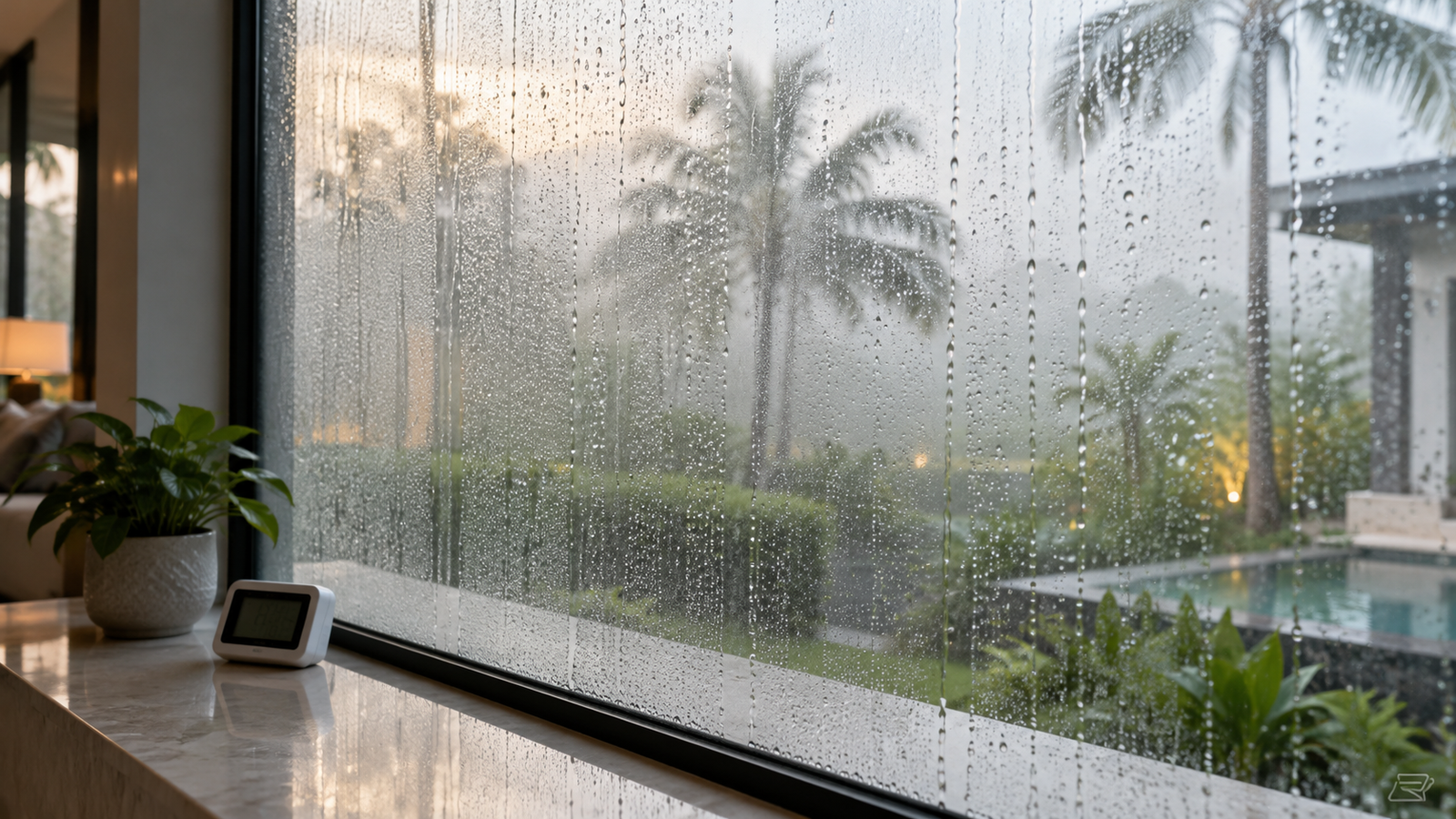
Most people think of Dubai as hot and dry, but anyone who has lived through an August here knows the humidity in Dubai can be intense. Coastal air heavy with moisture, combined with homes that are air-conditioned around the clock, creates the perfect conditions for condensation, damp patches and mould, especially in villas.
This guide explains why humidity causes problems in Dubai villas, how to spot early signs of mould, the ideal indoor humidity levels to aim for, and practical steps to keep your home dry, healthy and protected through the summer.
Key takeaways
- Dubai’s average dew point peaks at around 27°C in August, which means summer air carries a lot of moisture even when relative humidity readings look moderate.
- When this warm, moist air meets surfaces cooled by air-conditioning, such as ducts, vents and walls, it condenses, leading to damp, stains and mould.
- Aim to keep indoor relative humidity between about 40% and 60%; below 60% helps prevent mould and below 50% helps control dust mites.
- The most common villa culprits are poorly insulated AC ducts, switching AC off while travelling, poor bathroom ventilation and closed wardrobes on external walls.
- Small areas of surface mould can be cleaned by residents; larger or recurring mould needs professional help and fixing the moisture source.
How humid is Dubai?
Dubai’s average relative humidity, according to the Dubai Meteorological Office, ranges from around 50–55% in late spring and summer to 61–65% in the cooler months. But relative humidity alone is misleading in hot weather. What matters for condensation is the dew point: the temperature at which moisture in the air turns into water.
| Month | Average daily high | Average relative humidity | Average dew point |
|---|---|---|---|
| June | ~40°C | ~55% | ~23.8°C |
| July | ~41.5°C | ~55% | ~26.5°C |
| August | ~42°C | ~53% | ~27.2°C |
| September | ~39.5°C | ~59% | ~24.9°C |
Climate normals for Dubai (NOAA, Dubai Meteorological Office), as compiled in public climate summaries.
A dew point of 27°C means that any surface in your villa colder than about 27°C can collect condensation if outdoor air reaches it. Air-conditioned rooms, AC ducts and supply vents are far colder than that, which is why summer is when most damp and mould problems appear. On the most humid days, Dubai’s “feels like” temperature has exceeded 60°C.
Why villas are especially prone to humidity problems
- More air leakage: villas have more doors, windows, roof areas and external walls than apartments, so more humid outdoor air finds its way in.
- Long duct runs: ducted AC systems in ceilings and roof voids can sweat if the insulation is damaged, poorly installed or missing, dripping onto ceilings.
- Large, less-used rooms: guest rooms, maid’s rooms and storage areas that are closed off with little airflow can become damp.
- Bathrooms and laundry rooms: showers, washing machines and tumble dryers add moisture, and many older villas have weak extractor fans.
- Pools and gardens: evaporation from pools and irrigation increases humidity around the home.
- Roofs and terraces: failed waterproofing lets water into walls and ceilings after rain or from irrigation.
- Holidays: many residents travel in summer and turn the AC off or very high, letting humidity build up in a closed house.
Signs of humidity and mould problems
- A musty or earthy smell, especially in wardrobes, storage rooms or after returning from a trip
- Black, green or grey spots on ceilings, around AC vents, in shower corners, behind furniture or inside wardrobes
- Water stains, bubbling paint or peeling wallpaper
- Water dripping from AC vents or ceiling grilles
- Condensation on windows, pipes or cold walls
- Clothes, shoes, leather bags or books in cupboards developing mould
- Rooms that feel clammy even when the AC is on
- Indoor humidity readings consistently above 60% on a hygrometer
What is the ideal indoor humidity in a Dubai villa?
ASHRAE, the international engineering body for heating and cooling, gives an acceptable indoor relative humidity range of about 30–60%. Health and building guidance commonly recommends keeping humidity below 60% to prevent mould growth and below 50% to control dust mites. In Dubai’s climate, a practical target is around 40–55% in summer.
The easiest way to know where you stand is to buy one or two inexpensive digital hygrometers and place them in problem areas, such as a bedroom wardrobe, a bathroom and a storage room. Check readings at different times of day.
Common causes in Dubai villas and how to fix them
1. Sweating AC ducts and vents
If cold AC ducts are not properly insulated or the insulation has been damaged, warm, moist air in the ceiling void condenses on them. Water then drips onto the ceiling, causing stains and mould. You may also see condensation and mould around supply grilles.
Fix: ask an AC technician to inspect duct insulation and seal gaps, check that ceiling voids are not drawing in outdoor air and clean ducts annually. Many villa owners include duct inspection in their annual maintenance contract.
2. AC that cools but does not dry the air
Air-conditioners remove moisture as they cool, but an oversized unit or one set too cold may cool a room quickly and switch off before it has removed enough humidity. Dirty filters and coils reduce dehumidification too.
Fix: service AC units regularly, clean or replace filters, and avoid setting temperatures very low. Many systems have a “dry” mode that prioritises dehumidification. In persistent cases, an HVAC specialist can assess whether the system is correctly sized or recommend adding dehumidification.
3. Switching the AC off while travelling
Turning the AC off completely in summer allows humidity to rise sharply in a closed villa, and mould can grow within days on clothes, furniture and walls.
Fix: keep the AC running at a moderate temperature, typically around 25–27°C, while you are away, leave internal doors and wardrobe doors open for airflow, and ask someone to check the house if you will be away for weeks. Consider placing a dehumidifier in the most vulnerable room.
4. Poor bathroom and laundry ventilation
Showers and laundry release a lot of moisture. Weak or blocked extractor fans let it settle on walls and ceilings.
Fix: run extractor fans during and for 15–30 minutes after showers, clean fan grilles, and replace weak fans. Wipe down shower walls and squeegee glass after use. Make sure tumble dryers vent properly.
5. Closed wardrobes and storage rooms
Built-in wardrobes against external walls are a classic mould spot in Dubai villas, because the wall behind them is cooler and air barely moves.
Fix: leave a small gap between clothes and the back wall, open wardrobe doors regularly, avoid storing damp items, and use moisture absorbers or a small dehumidifier in persistent cases.
6. Leaks and failed waterproofing
Not all damp comes from humidity. Leaking pipes, failed roof or terrace waterproofing, garden irrigation splashing against walls and leaking pools can all cause damp patches.
Fix: if damp appears in the same spot after rain, irrigation or showers, look for a leak. A plumber or waterproofing specialist can trace it. Fixing the source is essential; painting over damp only hides it for a few months.
7. Gaps around doors and windows
Worn seals let humid outdoor air leak in constantly, especially in older villas.
Fix: replace weather seals on doors and windows and close gaps around service penetrations.
Summer checklist for a dry villa
Before summer (March–May)
- Service every AC unit and clean or replace filters
- Inspect duct insulation in ceiling voids and the roof
- Check roof, terrace and bathroom waterproofing
- Test bathroom and kitchen extractor fans
- Replace worn door and window seals
- Place hygrometers in key rooms
During summer (June–September)
- Keep indoor humidity below 60%, ideally 40–55%
- Avoid setting the AC extremely low; use dry mode on very humid days
- Run extractor fans after showers and cooking
- Keep wardrobe and storage room doors open regularly
- Check AC vents and ceilings for drips or stains
- Do not switch the AC off when travelling
- Water gardens early in the morning or late in the evening, away from walls
After summer (October–November)
- Inspect wardrobes, storage areas and ceilings for mould
- Clean AC ducts and service units again
- Repaint stained areas only after fixing the cause, using anti-fungal paint in wet areas
Dealing with mould safely
Small areas
Small patches of surface mould on hard surfaces, such as tiles, glass, painted walls or window frames, can usually be cleaned with water and detergent or a household mould cleaner. Wear gloves and, ideally, a mask, ventilate the room and dry the area thoroughly afterwards. Never mix bleach with ammonia or other cleaning products.
When to call a professional
- Mould covering a large area, often cited as more than about 1 square metre
- Mould that keeps coming back after cleaning
- Mould inside AC ducts or behind walls and ceilings
- Mould on porous materials such as plasterboard, carpets or upholstery
- If anyone in the home has asthma, allergies or a weakened immune system
Professional mould remediation companies in Dubai can assess the extent of the problem, remove affected materials, clean ducts and advise on fixing the moisture source.
Health effects
Damp and mould can trigger allergy symptoms such as sneezing, a runny nose and itchy eyes, and can worsen asthma and other respiratory problems in sensitive people. If you notice persistent symptoms that seem linked to your home, speak to a doctor and address the damp problem promptly.
Dehumidifiers: do you need one?
In most well-maintained, properly air-conditioned villas, the AC system handles humidity on its own. A dehumidifier is worth considering if:
- Hygrometer readings stay above 60% even with the AC working well
- You have a damp storage room, basement, maid’s room or wardrobe area
- You travel often in summer and want to protect the house while away
- You are drying out a room after a leak
Choose a model sized for the room, with a built-in humidistat so you can set a target level, and empty or drain it regularly.
Tenants vs landlords: who fixes damp and mould?
In Dubai, landlords are generally responsible for keeping the structure and major systems, including AC, plumbing and waterproofing, in good working order. Tenants are usually expected to ventilate the home, run the AC sensibly, report problems promptly and avoid causing damage. If you are a tenant:
- Report damp, leaks and AC problems to the landlord or agent in writing, with photos
- Keep records of your communication and any repairs
- Check your tenancy contract for maintenance responsibilities
- Take photos at move-in and move-out to protect your deposit
If you are buying a villa, ask for a professional inspection that specifically looks for damp, mould, duct condensation and waterproofing problems.
Frequently asked questions
How humid is Dubai in summer?
Dubai’s average relative humidity in summer is around 50–60%, but dew points reach about 27°C in August. That means the air holds a lot of moisture, and on the most humid days the “feels like” temperature can exceed 60°C.
What is the best indoor humidity level for a villa in Dubai?
Aim for about 40–55% in summer. Keeping humidity below 60% helps prevent mould, and below 50% helps control dust mites. ASHRAE gives an acceptable range of about 30–60%.
Why is there mould around my AC vents?
Cold air from the vent cools the surrounding surface below the dew point of the room air, causing condensation. Poorly insulated ducts, dirty filters, or a system that cools but does not dehumidify enough can make this worse. Ask an AC technician to inspect the vents and ducts.
Should I turn off the AC when I travel in summer?
No. Turning the AC off completely lets humidity build up quickly in a closed villa. Keep it running at a moderate temperature, typically around 25–27°C, and leave internal doors open for airflow.
Do I need a dehumidifier in Dubai?
Not always. A well-maintained AC system usually controls humidity. A dehumidifier helps if readings stay above 60%, in damp storage rooms or wardrobes, or when you are away for long periods.
How do I get rid of mould in my villa?
Clean small surface patches with detergent or a mould cleaner, wearing gloves and ventilating the room, then dry the area. For large, recurring or hidden mould, or mould inside AC ducts, use a professional remediation company and fix the moisture source.
Is mould dangerous?
Mould can trigger allergy symptoms and worsen asthma and other breathing problems, especially in sensitive people. If you have health concerns, consult a doctor and deal with the damp promptly.
Who is responsible for fixing mould in a rented villa?
Landlords are generally responsible for structural issues, leaks, waterproofing and AC systems. Tenants should ventilate, use the AC sensibly and report problems promptly. The tenancy contract sets out the details.
Data sources: Dubai climate normals from NOAA and the Dubai Meteorological Office, as compiled in public climate summaries; ASHRAE Standard 55 humidity guidance as summarised by the North Carolina Department of Health and Human Services. Climate figures are long-term averages and actual conditions vary year to year.
Disclaimer: This article is for general information only and does not constitute medical, engineering, legal or professional advice. Every home is different, and the causes of damp and mould can vary. If you or anyone in your household has health symptoms that may be related to damp or mould, consult a qualified medical professional. For persistent damp, leaks, AC problems or extensive mould, seek advice from licensed HVAC, waterproofing or mould remediation specialists. Responsibilities between landlords and tenants depend on the specific tenancy contract and applicable law. While we aim to keep this information accurate and up to date, it may contain errors or omissions. We accept no liability for any loss, damage or injury arising from reliance on this content.